

Oblomov — 6 karakter
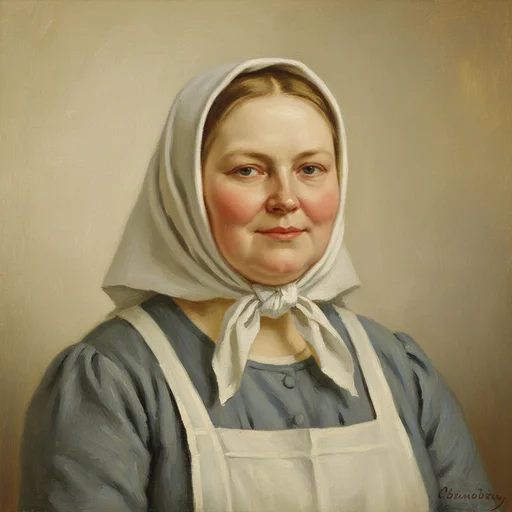
Agafya Matveyevna Pshenitsyna
A widow around thirty, simple, soft-headed, and entirely dedicated to housework and the kitchen. She lives in the Vyborg district and accidentally becomes Oblomov's landlady. With his entry into her life, she devotes all her energy and talent to his comfort, making perfect coffees and pastries. She does not find Oblomov's passive lifestyle strange; on the contrary, she sees it as her greatest duty to serve it with a silent, motherly compassion. Although she is ignorant and simple-minded, she is bothered by the games her cunning brother and Tarantyev play against Oblomov with her heart's purity, and she shows such sacrifice that she pledges her own pearls the moment he falls into financial distress. Following their formal union with Oblomov, she has a son named Andriyusha with him; however, after Oblomov dies, she loses the purpose of life and turns into an almost soulless shadow.

Andrey Karlovich Stolz
A half-German, half-Russian merchant/businessman born to a German father and a Russian mother. Raised in a village near Oblomovka with German discipline; he took the necessity of work from his father and the romanticism of Russian literature and music from his mother. He is the embodied symbol of the new generation's dynamism, constantly shuttling between European cities, mines, farms, and offices. Although he considers it a debt of loyalty and friendship to bring order to his best friend Oblomov's life and save him from his inertia, in the end, he is forced to just watch the swamp. His deep intellectual communion with Olga eventually turns into love, and the two establish an ideal life based on logic, progress, and equality.
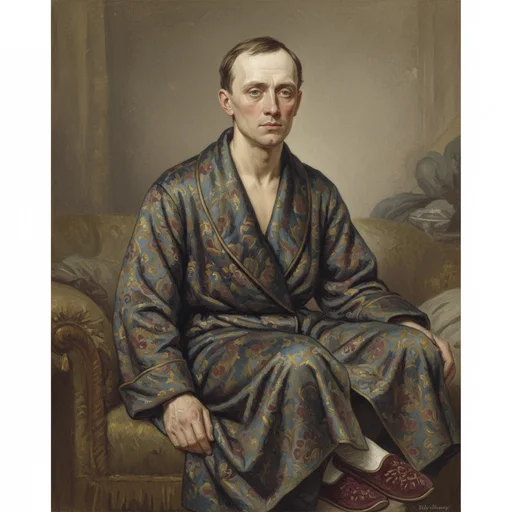
Ilya Ilyich Oblomov
Oblomov is a Russian nobleman and landowner living in St. Petersburg in his early thirties. Although he is a representative of a glorious lineage, he was raised on the Oblomovka estate in his childhood without ever lifting a finger, surrounded by servants who waited on him hand and foot. When he stepped into his civil service career, he found the formal, hurried, and alien structure of St. Petersburg unbearable and resigned, retreating to rot in a makeshift armchair at home. He constantly makes plans but can never implement them. Though he was revived for a moment by the love of the young and energetic Olga, he could not keep up with the dynamic life the relationship promised and withdrew in remorse and fear. Eventually, in the house of his landlady Agafya, who took on all his worldly worries without demanding any effort from him, he drifted slowly toward death in a state of profound psychological and physical lethargy.
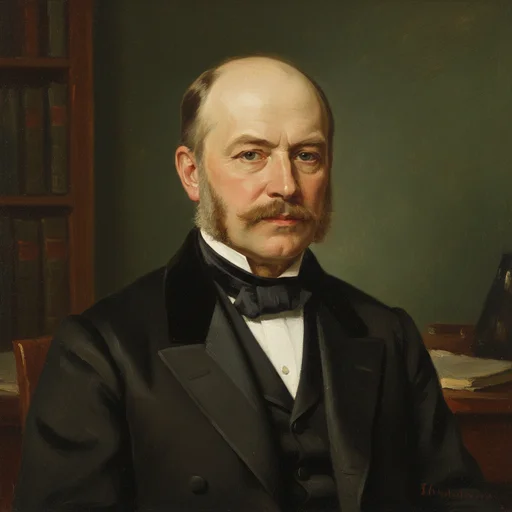
İvan Gonçarov
Ivan Alexandrovich Goncharov was born in 1812 in Simbirsk, on the Volga, into a well-off merchant family. He lost his father at the age of seven. His upbringing was shaped by his mother, Avdotya, and by his godfather Nikolai Tregubov, a retired naval officer, from whom he inherited both a fascination with the sea and a large library. After eight loathed years at the Moscow School of Commerce, he entered the philology faculty of Moscow University in 1831. On graduating he entered the civil service, working in St Petersburg as a translator at the Ministry of Finance. In those same years he joined the literary circle that met at the Maykov house; his first poems and stories appeared in its journals. A Common Story, published in 1847, made his name; Belinsky counted it among the best books of the year. In 1852 he sailed aboard the frigate Pallada as secretary to Admiral Putyatin, saw England, Africa and Japan, and returned overland through Siberia. The voyage produced the book The Frigate Pallada. Back home he served on the censorship committee. In the summer of 1857, at Marienbad, he set down in a single month the Oblomov he had carried in him for years; the novel appeared in 1859 and gave Russian the word oblomovshchina. The Precipice, twenty years in the making, followed in 1869. He was a slow narrator, patient with detail, drawn less to events than to the way a man decays from within and habit eats away at the will. His last years were solitary and embittered: he accused Turgenev of stealing his subjects and burned most of his late manuscripts. He never married. He died of pneumonia in St Petersburg in 1891.
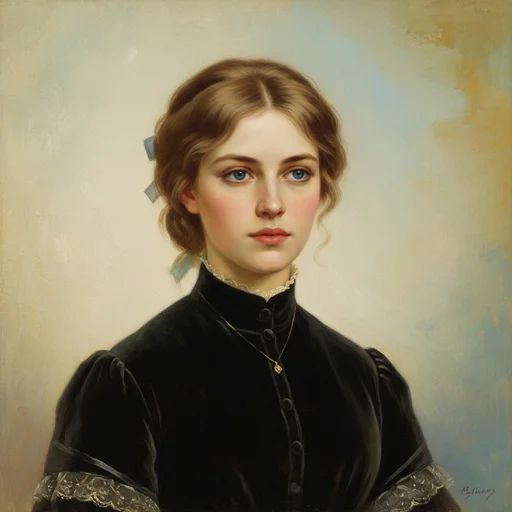
Olga Sergeyevna Ilyinskaya
A woman in her early twenties who is distinct from classic beauty standards but shines with nobility, clarity, and a powerful intellect. Although under her aunt's care, she raised herself to be extremely independent and wise. Her talent in music is an expression of her soul. Her love for Oblomov springs entirely from the ideal of being able to save him and her respect for the purity of his heart. However, Oblomov cannot reciprocate this recreation. When she realizes Oblomov's cowardice and the incompatibility between them, she breaks up with him at the cost of wounding her own heart. In the end, she chooses the love and will of Stolz, her mentor and friend, and achieves a respectable, evolutionary, and unwavering European-style marriage.
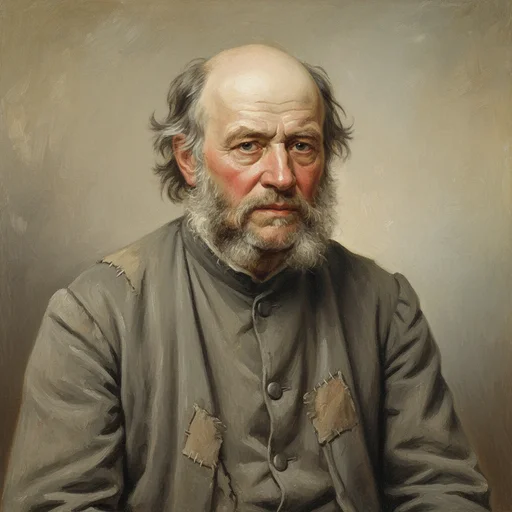
Zakhar Trofimich
A veteran, lethargic manservant over fifty who has been with Oblomov since childhood; his whole life is intertwined with Oblomov's. He is the only relic left from the family's ancient greatness and the most ardent guardian of the belief in his noble past. Besides being mostly clumsy, inept, and dusty, he gives rude answers. Cleaning is torture for him. The presence of the widow Agafya in Oblomov's life and the skillfulness of Anisya disturbed him, but he could not object. After Oblomov's death, he refused to move into Agafya's house or enter the patronage of Stolz, choosing instead to pack his belongings and fall into begging on the streets.