

The Fall of Leaves — 8 karakter
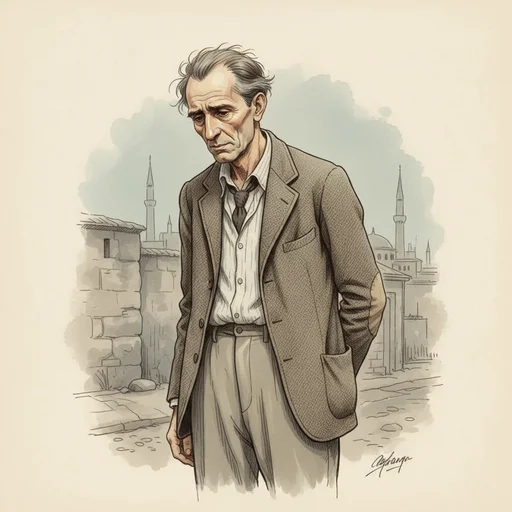
Ali Riza Bey
A former district governor (mutasarrıf) and a civil servant who adopted living his life with honor as a motto. After retiring from his position, he aims to resist the moral decay around him and begins working at Altın Yaprak Anonim Şirketi, but resigns because he cannot turn a blind eye to his boss's immorality. This honorable stance ignites the downfall of his family's economy. Following his resignation, he loses all his authority step by step due to his growing children's desire for a luxurious and modern life, his wife Hayriye Hanım's incitement, and his eldest son Şevket's imprisonment. Unable to bear the scandals turning in his house, he helplessly watches his children fall away like leaves. By the end of the novel, he suffers a stroke (paralysis), falls ill, loses all his stubborn morality, and agrees to a life of dependency in his 'fallen' daughter Leyla's luxury home. He is a tragic figure who is a victim of his own honesty.
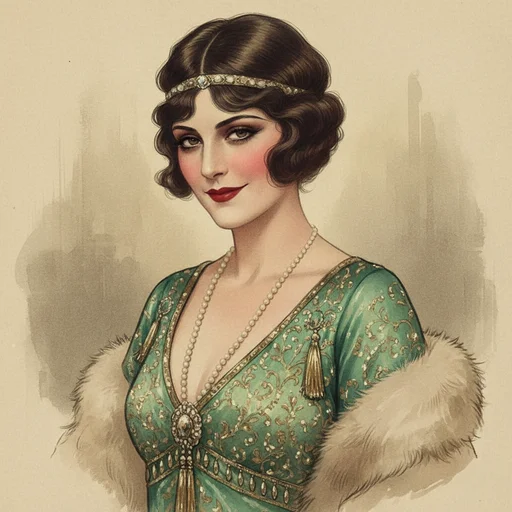
Ferhunde
She is a former company typist who is thought to have escaped the brink of a life of vice with the compensation and aid she extracted from her father's company manager, Muzaffer, before eventually being married to Şevket. However, from the day she arrives as a bride, she tears the household apart. She drains Şevket's blood with her obsession with society life, invitations, luxury, and ostentation. She abandons her husband, who goes to prison for committing theft to keep up with her expenses, without the slightest bit of pity. Throughout the novel, she plays the role of the microbe of immoral, parasitic, and corrupt modernization that infiltrates the family.
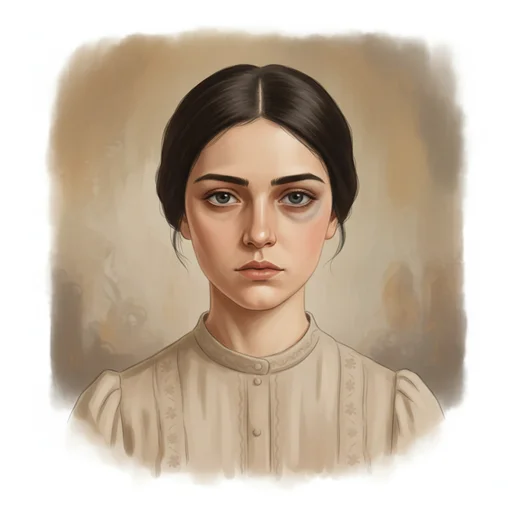
Fikret
Ali Rıza Bey's eldest daughter. She is intelligent and loves reading, but because of a physical defect (a blemish on her eye), she falls behind her sisters in beauty, which leads her to choose a dignified and mature path from an early age. She stands by her father against the family's corruption and her mother's mistakes, but she also criticizes her father's weakness. To escape the 'hell' at home, she marries an older widower with three children (Tahsin Bey) and moves to Adapazarı. Unfortunately, she does not find what she was looking for there either and is dragged into a different form of hell: never-ending fights with her new husband's family; however, out of pride, she does not return to her father.
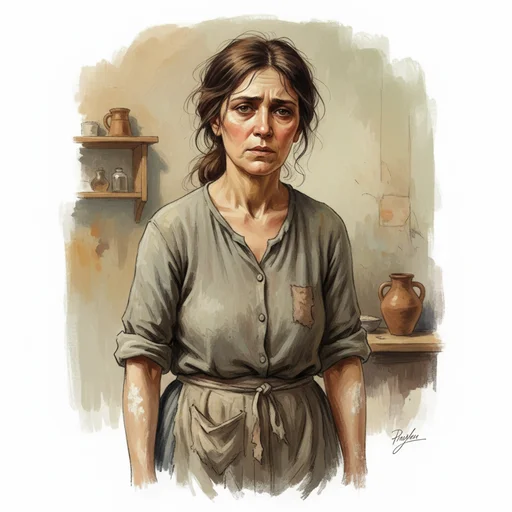
Hayriye Hanım
Ali Rıza Bey's wife. While she is an obedient Ottoman woman who respected her husband and managed the house at the beginning of the novel, she undergoes a radical change as poverty and deprivation knock at the door. She cannot tolerate her children going hungry and suffering because of her husband's honor, which she finds exaggerated. This fear turns her into a nervous, rebellious, and materialistic person. She covers up her daughters' desires for luxury and breaks her husband's resistance. Ultimately, she prefers the comfort coming from Leyla's immoral earnings over the honest but starving days of her former life and moves in with Leyla.

Leyla
One of the middle and most beautiful daughters of Ali Rıza Bey. She is excessively fond of the Westernized lifestyle of the period, luxury, and entertainment. She views her family, suffocating in poverty, as a burden to be discarded. She uses her beauty and femininity as a tool to reach the life she desires. Although she is briefly engaged to a fake Syrian (Abdülvehhap), she loses this chance due to her sister's schemes. Ultimately, she sells all her honor to become the mistress of a rich, married, and ugly lawyer. She goes so far as to have her father evicted from the house; yet, in the end, she transforms into the corrupt 'savior' who provides everyone in her family (including her father) with a life of luxury by buying them off.

Necla
One or two years younger than Leyla, she is a sister who resembles her greatly in both appearance and frivolity. She knows no bounds in her desire to escape poverty and attain a wealthy life. When she realizes that Leyla's fiancé, Abdülvehhap, has a roving eye, she seduces him without a shred of remorse, has a major falling out with Leyla, and marries him to move to Syria. However, the game does not turn out as she expected; while she thought she would build a life of luxury and monogamy as a princess in Syria, she ends up in a dilapidated house in the desert, surrounded by too many stepchildren and mired in poverty.
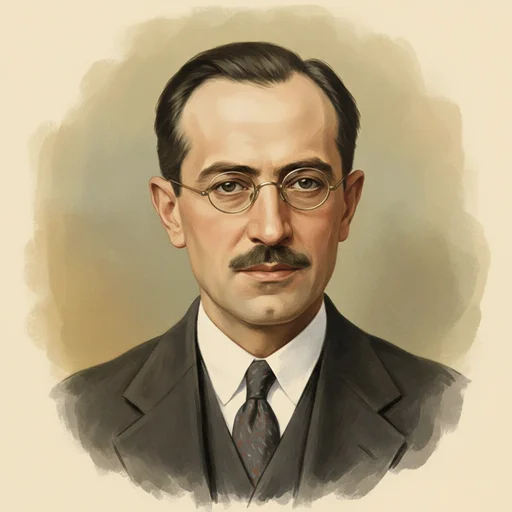
Reşat Nuri Güntekin
Reşat Nuri Güntekin was born in 1889 in Üsküdar, on the Asian shore of Istanbul. His father, İbrahim Nuri Bey, was an army physician; his mother was Lütfiye Hanım. As his father was posted from one town to another, the boy’s childhood moved with him: he began primary school in Üsküdar and finished it in Çanakkale, then continued his secondary studies in Çanakkale and İzmir. In 1912 he graduated from the literature department of the Darülfünun in Istanbul, today’s Istanbul University. He started out teaching French in Bursa and later taught literature and composition in Istanbul schools. Criticism and short stories published in magazines under pen names drew him into writing. He had first written Çalıkuşu (The Wren) as a play titled İstanbul Kızı (The Girl from Istanbul); when it could not be staged, he turned it into a novel. Serialised in a newspaper in 1922, the book made his name known overnight to a wide readership. His appointment as an inspector for the Ministry of Education in 1931 set the course of the rest of his life; the Anatolian towns he travelled through for years supplied the material both for Anadolu Notları (Anatolian Notes) and for his novels. In Yaprak Dökümü (The Fall of Leaves), published in 1930, he told of a civil servant’s family coming apart under a changing way of life. He sat as deputy for Çanakkale from 1939 to 1946, returned to inspection work, and in 1950 went to Paris as Turkey’s representative to UNESCO. He wrote a plain Turkish close to everyday speech. He drew the people of Anatolia from within rather than from a distance and set his social criticism inside an affecting story; he is counted among the writers who opened the Turkish novel to the provinces. He retired in 1954. He died on 7 December 1956 in London, where he had gone for treatment for lung cancer, and was buried in Karacaahmet Cemetery in Istanbul.

Şevket
He is Ali Rıza Bey's eldest son, in his twenties. He takes the emotional and financial burden of the family on his shoulders at a young age and starts working as a clerk at a bank. At first, he is a noble-spirited and promising young man, much like a copy of his father. However, the increasing misery of the family and the insatiable desire for luxury of his new wife, Ferhunde, wear Şevket down. He struggles beyond his means to both keep the family together and make his wife happy; when he hits a dead end, he sacrifices his honesty by embezzling money from the bank. He is caught and goes to prison; this disaster paradoxically becomes his salvation, protecting him from the exploitation and destruction at home.