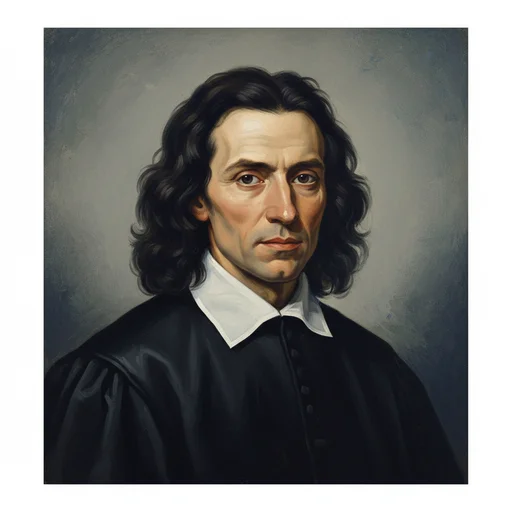

Baruch Spinoza
Baruch Spinoza's masterpiece Ethica, published in 1677, is a pantheistic work that examines God, the mind, emotions, and morality using the geometric method (axioms and theorems). The primary purpose of the work is to liberate man from the bondage of fleeting passions and lead him to ultimate happiness and freedom through reason.
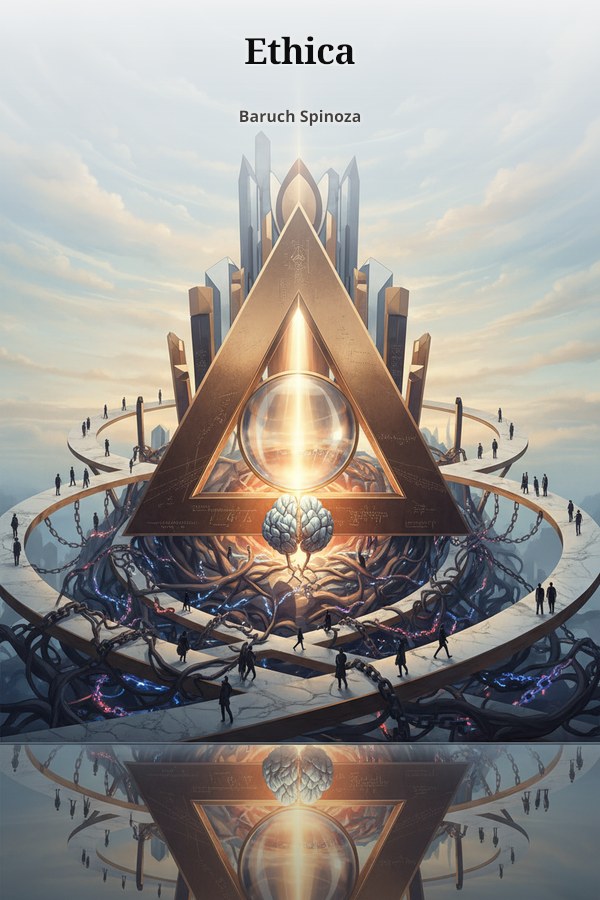
The incessant internal-cosmic struggle between the state of 'slavery,' where humans are prisoners of their blind passions, the irrational external influences of nature, and their superstitions, and the state of 'freedom' and 'happiness,' where they resolve these delusions through rational intellect to grasp the knowledge of God/Nature and attain inner peace.
A multidimensional, purely mental (theoretical) philosophical landscape rising above the intricacies of the human soul, the movements of emotions, and the ontological layers of existence.
17th Century (The historical reference for when the work was written, though the conceptual plane is 'Sub specie aeternitatis', i.e., in the dimension of eternity, timelessness, and infinity).
A rational, deterministic philosophical universe, possessed of complete logical and geometric precision, and filled with a sober contemplation illuminated by the light of reason.
An analytical first-person external and internal narrative voice that guides the reader step-by-step toward irrefutable truths, employing a didactic, authoritative, calm, and deductive geometric reasoning (more geometrico) method.
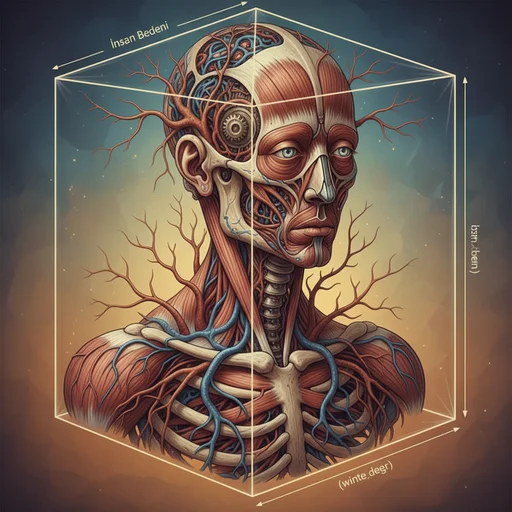
No mode of action can exist in the universe outside the eternal and necessary laws of God or Nature. Man, like all other beings, is strictly bound to an absolute chain of causality, and 'free will' is an illusion. Mind and Body are the structure of one and the same Substance (God), operating in parallel and simultaneously through two different attributes known as Thought and Extension. There is no external purpose or goal (teleology); everything functions solely through the necessity of its own nature within a network of cause and effect.
The early Enlightenment era blossoming in 17th-century Netherlands, where the stifling effects of Scholastic medieval philosophy were being dismantled, post-Renaissance Cartesian philosophy was being debated, and religious bigotry was clashing with reason.
Characters are arranged at equal intervals on a circle; you can read the relationship type and dynamics by clicking on the lines.
Bir çizgiye tıklayarak ilişki detayını açın.
Spinoza makes grasping the absolute Substance the focus of his life. He cleanses himself entirely of passive emotions and examines the rational rules of nature with profound awe and knowledge.
The mind's highest endeavor, its highest virtue, is to know things through the third kind of knowledge (God).
While acknowledging the genius of Descartes in part, Spinoza fundamentally dismantles his arguments regarding the mind-body separation and the absolute nature of the will, constructing his own theory in opposition to it.
He criticizes Descartes in harsh terms, stating that he cannot refrain from being astonished by the examples Descartes provides regarding the union of the human mind and body.
Instead of pitying or mocking the tragic slavery of the ignorant person, Spinoza attempts to understand them with the cold-bloodedness of an engineer and treats them like a ruthless but beneficial physician who points the way to salvation.
He shows them the right path by stating that he wishes to turn to the discussion of those who, rather than knowing men, enjoy mocking their affects and passions, without hating them.
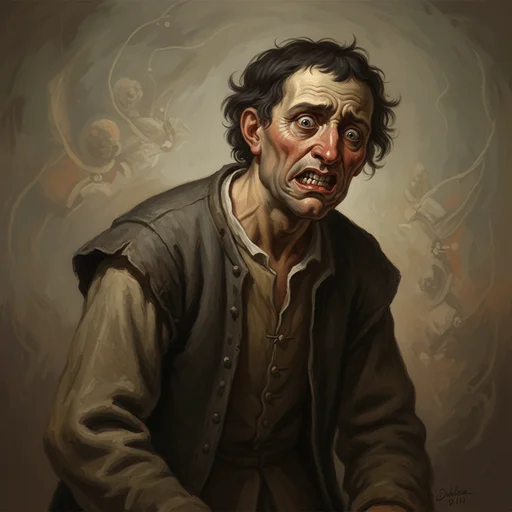
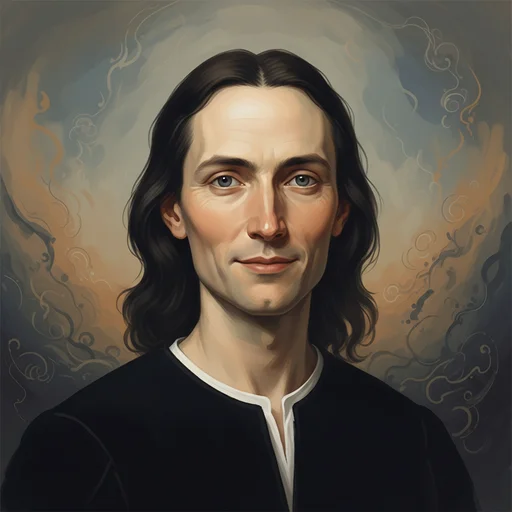
While the Free Person displays complete rational control and lives serenely, the Slave/Ignorant Person writhes under the unstable dominance of fear and superstition, like a leaf tossed in the wind.
The ignorant, because they are driven in many ways by external causes... can in no way attain inner peace.
The enslaved human imagines God as a celestial dictator disconnected from nature who gets angry or rewards, thus turning the God/Nature relationship into an illusion of pure fear and obedience.
People characterize God as someone resembling themselves, with desires, and love Him merely out of self-interest or fear of punishment.
The Free Person perceives God/Nature in its entirety. Instead of fighting against the laws of nature, they embrace them, rising to a fearless intellectual virtue and a smooth acceptance.
We are joyful to the extent that we know God as the cause of everything.
People who live according to reason possess the capacity for perfect solidarity and mutual benefit, as their interests do not directly clash and they seek only the universal truth.
Insofar as men live according to the guidance of Reason, they must always necessarily agree in nature.
Descartes claimed that the mind could freely shape the body through the pineal gland, thereby placing the mind's position within nature's causal network on an entirely erroneous foundation.
Spinoza presents his critique of Descartes' proof regarding the seat of the mind in a gland in the brain, calling it 'nothing but a philosopher's attempt to explain obscure things through occult qualities.'
People who are slaves to their passions lose the common ground of reason and pursue the fulfillment of their own egoistic desires, which plunges them into a realm of relentless competition, conflict, and hatred.
Insofar as men are subject to passions, they can be contrary to one another by nature.
The mental clarity reached by Spinoza establishes the foundation for the ideal of the 'Free Man' he constructs in the text. The philosopher is, in fact, the teacher and the very reflection of this ideal that he describes in the text and desires everyone to attain.
The philosopher says, 'In this part (Of Human Liberty), I shall examine the power of reason, showing what reason can do against the affects.'