
Homeros
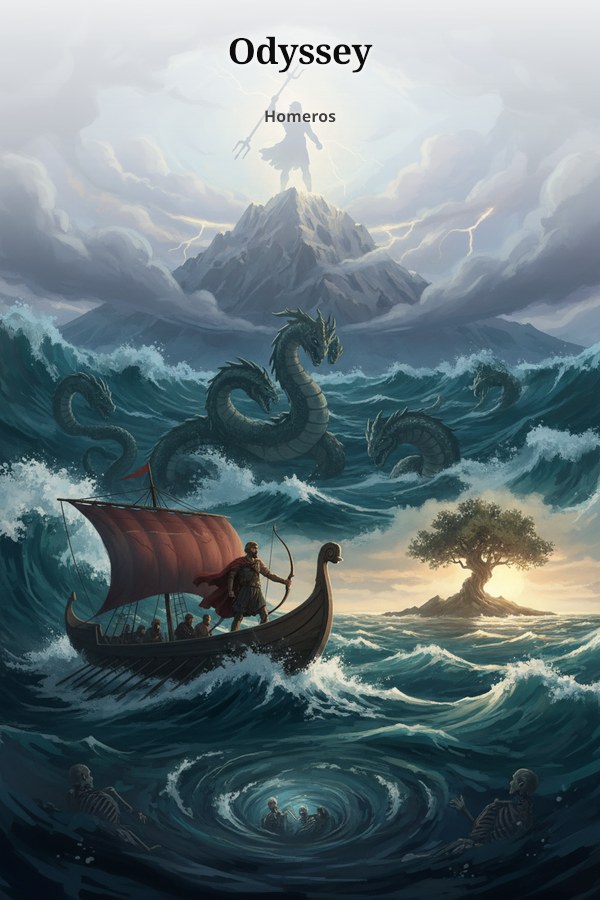
The Odyssey is an epic (epic poem). The work narrates the adventures of Odysseus, King of Ithaca, who tries to return home after the Trojan War.
Odysseus's struggle after the Trojan War to return to his homeland against the obstacles set by the gods (especially Poseidon), mythological monsters, and the ruthlessness of nature; simultaneously, the struggle of his son Telemachus and his wife Penelope in their homeland of Ithaca against the arrogant suitors who seek to seize the kingdom and the queen by force.
The Mediterranean basin, the kingdom of Ithaca, Mount Olympus, various mythological islands (Calypso's Island, Circe's Island, the land of the Phaeacians), and the dark Hades (Underworld).
Late Bronze Age, ten years after the end of the Trojan War (around the 12th century BC).
Epic, mythological, mysterious, fraught with danger, nostalgic, and dramatic. A majestic atmosphere that reflects both the miraculous interventions of divine powers and the profound sorrows and glorious struggles of humanity, blended with the relentless power of the sea and nature.
At times, an omniscient third-person external narrator who addresses the Muses; at other times, a first-person internal narrative by Odysseus as he recounts his adventures to the Phaeacians.
Gods can take human form to intervene directly in the lives of mortals, helping them or creating obstacles. However, even the gods cannot always completely defy universal fate (Moira). Treating strangers and beggars with respect and providing them hospitality is a sacred duty, as Zeus is the protector of guests. Defying the gods or acting with arrogance (hubris) leads to disaster. In the underworld (Hades), the dead are unconscious shadows, and blood offerings are required to communicate with them.
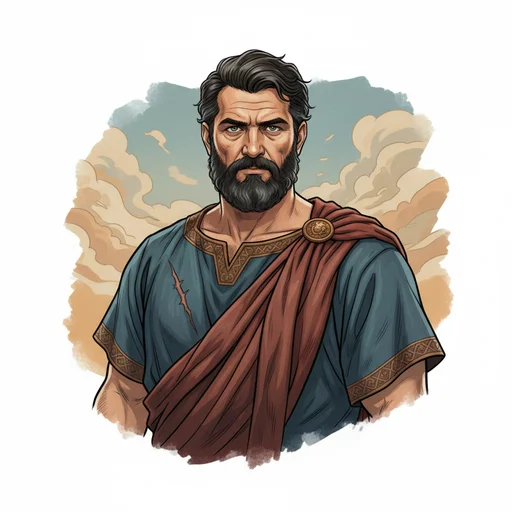
Ancient Greek mythology and epic culture. The society is ruled by kings and nobles. The virtue of heroism (arete) and the renown of one's name (kleos) are of paramount importance. A patriarchal family structure prevails, yet intelligent and loyal women (such as Penelope) are held in high regard. Slavery is common, but deep bonds based on loyalty can be formed between master and slave.
Characters are arranged at equal intervals on a circle; you can read the relationship type and dynamics by clicking on the lines.
Bir çizgiye tıklayarak ilişki detayını açın.
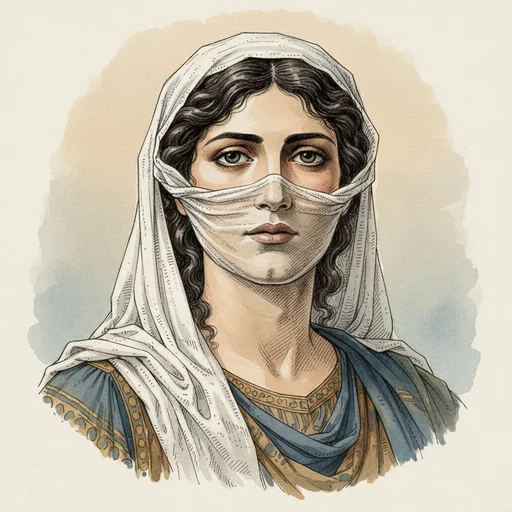
Deep loyalty, an unbreakable bond, and an equality of wit. Despite a twenty-year separation, they never lose their devotion to one another. Both are clever and neither yields completely without putting the other to the test.
Penelope asking if the bed can be moved to test Odysseus's identity, and Odysseus proving himself by revealing the secret of the bed.
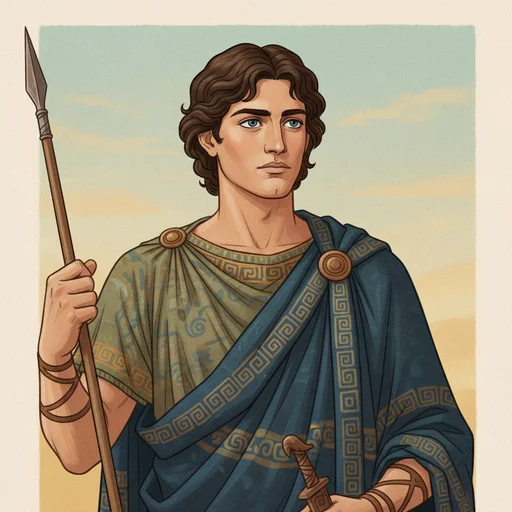
An estranged father-son relationship. Telemachus grows up viewing his father as a legendary figure; when Odysseus returns, he approaches him as a trusted heir and companion-in-arms to whom he will pass down the kingdom.
Odysseus revealing his identity to his son while disguised as a beggar in Eumaeus's hut, followed by the two embracing and weeping.
A relationship based on mutual appreciation and protection. Athena admires Odysseus's cunning and intellect; she constantly helps him and his son, guiding them through disguises.
Athena appearing to Odysseus as a shepherd upon his arrival in Ithaca and encouraging him to disguise himself as a beggar to defeat the suitors.
Divine wrath and a relentless cycle of vengeance. Odysseus earns the god's eternal enmity for blinding Poseidon's son, which is the primary reason for his prolonged journey.
Poseidon stirring up a terrible storm to shatter the raft just as Odysseus was approaching his homeland with the help of the Phaeacians.
A protective mother-son dynamic that shifts authority over time. While Penelope sees her son as a child, Telemachus strives to prove he has come of age and is the man of the house.
Telemachus asserting his authority by telling his mother, 'Go up to your room, the bow is a man's business, and I am the master of this house.'
Mutual manipulation and hatred. While Antinous forces Penelope to marry in order to seize the house, Penelope detests him but uses clever strategies to buy time.
Penelope cursing Antinous to his face after learning he plotted to ambush Telemachus, calling him a 'schemer of evil'.
A profound trust and respect between master and loyal servant. Eumaeus cares for the man in the best possible way even without knowing he is his master, and he voices his devotion to his king.
Eumaeus offering the finest pork to Odysseus in his beggar's disguise and shedding tears for his master.
A bond that transforms from initial threat and hostility into passion and obedience. Circe turns Odysseus's companions into swine, but she submits to Odysseus's strength, falls in love with him, and becomes his guide.
Circe falling to her knees when Odysseus draws his sword, and subsequently directing him on how to travel to Hades.
A deadly opposition. Odysseus harbors a cold-blooded plan of vengeance against Antinous, the symbol of the plundering of his home and the disrespect shown to his family.
Odysseus driving his first arrow into the throat of Antinous while he is drinking wine, immediately after winning the archery contest.
The clash between physical strength and superior intellect. While the giant Polyphemus savagely eats Odysseus's men, Odysseus defeats him with his wit and a false name (Nobody).
Odysseus blinding the giant's single eye with a heated olive stake and succumbing to his hubris by shouting his real name while escaping the island.