

Romeo and Juliet — 8 karakter

Capulet (Lord Capulet)
Verona's supposed champion of virtue, the aged master of the noble house of Capulet, and Juliet's ill-tempered father. The blood feud with the house of Montague runs so deep that he himself can utter sentences suggesting that peace should be easy to maintain. Though advanced in age, he is unable to shake his stubbornness to pick up a sword when necessary. Early in the story, he appears as an understanding father who advises Count Paris to wait two more summers before marrying his thirteen-year-old daughter, whom he treasures like a princess, and suggests he should win Juliet's heart. He even encourages tolerating his enemy Romeo with respect at the ball to avoid causing a disturbance. However, after Tybalt's death, things go off-script, and he becomes monstrous in response to Juliet's rebellion. His violent and cruel nature makes him the very person who dictatorially demands a total family consensus over the Prince's order, threatening to disown his daughter and leave her to beg on the streets.
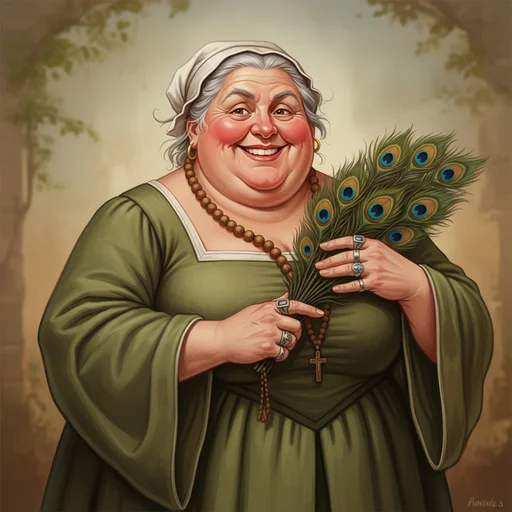
Nurse
The Nurse, who guides Juliet's life more than the pantry and kitchen of the Capulet household, is the key servant who has raised Juliet like her own daughter (Susan) since infancy. She is more identified with Juliet's life than even her master, Capulet, or her mistress, Lady Capulet. She sympathizes with the love for Romeo; she enjoys performing highly risky mediations such as facilitating communication and procuring a rope ladder. She possesses a traditional sense of loyalty, but it is quite shallow regarding moral and eternal fidelity. When things get complicated and, despite Juliet's husband having been exiled for Tybalt's death, there is a crisis where her father wants to force Juliet to marry Paris, the Nurse displays her pragmatic character. When she naively suggests that Juliet ignore Romeo and choose the handsome and wealthy Paris, stating that 'the first husband is null and void,' she is lost to Juliet's world forever. She is also the one who finds Juliet in her bed, numb and thought to be dead.

Juliet
Juliet is the daughter of the Capulets, a powerful and stubborn family of the period; she is not yet fourteen and has been raised in isolation. While growing up under her father’s protection and her nurse’s affection, a rebellion ignites when the danger of marrying Paris appears on the horizon. She becomes infinitely attached to Romeo, whom she sees at the Capulet ball. The initial image of a shy, quiet, and rule-bound young girl quickly shatters through her love, evolving into an independent woman capable of making highly rational, provocative decisions. As her husband Romeo is exiled and her cousin Tybalt has died at her husband's hands, she struggles with great grief. She ostensibly defies her family, who force her to marry Paris, but seeks refuge with the Friar, accepting a death-like sleeping potion. Because of the terrible tragic failure of the letter, she awakens to find her husband's corpse and, without the slightest hesitation, crowns her loyalty with Romeo’s dagger, killing herself.

Mercutio
A kinsman to the Prince of Verona and Romeo's dearest, liveliest friend. Because he is not tied to any noble family, he moves freely between both households. He is the symbol of wit in the play, hovering at the edges of reason and madness. He has no tolerance for love, women, dreams, or pure romanticism, constantly satirizing them with sharp witticisms and erotic/sarcastic innuendos. Enraged by Tybalt's provocation of Romeo and Romeo's submissiveness, he enters the duel of honor himself. Even when mortally wounded, he does not lose his humor, but the curse he levels at both the Capulets and the Montagues—'A plague o' both your houses!'—as he dies engraves the turning point of the play into the heart of the tragedy.
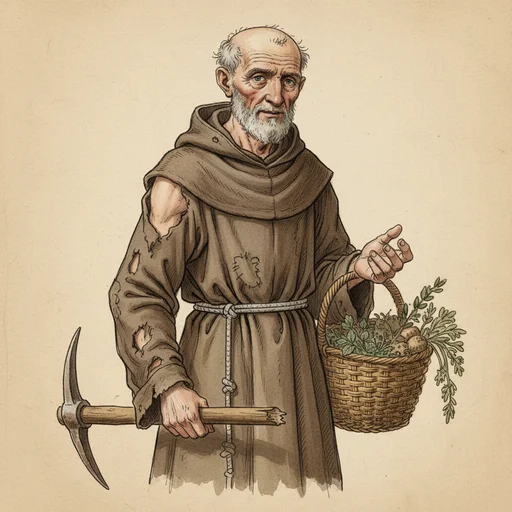
Friar Lawrence
Friar Laurence, a holy father of the Franciscan order, is a wise and philosophical character in Verona who spends intense effort on herbs and pharmacy. As Romeo's mentor, Laurence takes a risk by helping the young couple marry with the intention of ending the families' long-standing feud. When events spiral out of control with Tybalt's death and the decree of exile, he does not panic but instead conceives a plan for fake death and internment in the tomb to save Juliet. This noble-hearted plan is ruined when his messenger, Friar John, fails to reach Mantua due to a quarantine. In the finale, he arrives at the cemetery, albeit late, and finds Romeo dead, but as he panics and leaves Juliet alone, her suicide cannot be prevented. Though he clarifies the situation to the public, he is considered an indirect killer.
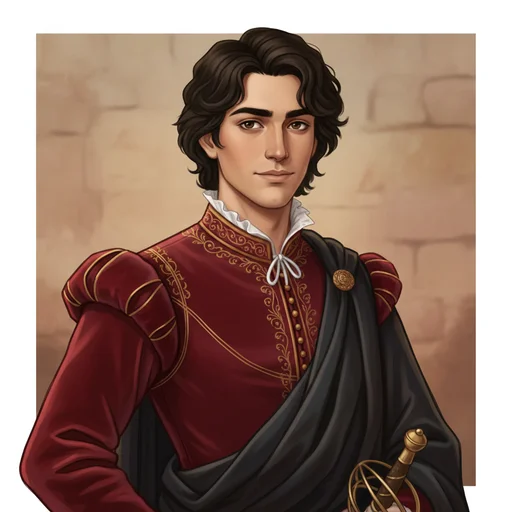
Romeo
Romeo is the only son of the respected and noble Montague family. At the beginning of the play, he is introduced as a depressive teenager who confuses night for day, suffering from an unrequited, melancholic love for a girl named Rosaline. The moment he sees Juliet at a ball held by the enemy Capulet family, which he attends secretly at the insistence of his friends Mercutio and Benvolio, he finds true love and instantly abandons his superficial infatuation. Placing Juliet at the center of his life, he ignores the ancient feud between their two families and the risk of death. Shortly after marrying in secret in Friar Laurence's cell, he kills Tybalt—whose treachery caused the death of his soulmate, Mercutio—in a fit of vengeful rage while trying to intervene in a street brawl. This act leads to his exile from Verona and the beginning of the downward spiral. While in exile in Mantua, he receives false news that Juliet has died, purchases cheap poison, and commits suicide at his lover's grave for the sake of the love he believed in.

Tybalt
Lady Capulet's nephew and Juliet's cousin. He is a strict, fiery, and prideful representative of the Capulets and is one of the main drivers of violence in the play. At the ball, he recognizes Romeo by his nature as a Montague and cannot bear the sound of his voice; he is forced to stop at his uncle Capulet’s warning, but he draws his sword the next day to protect his honor. Despite the Prince's order, he challenges Romeo to a duel with insulting words; he delivers a fatal wound to Mercutio, who interferes. Romeo takes Tybalt's life as the price for his friend's. His death ignites the fuse that leads the tragedy from exile to poison; because the Capulets are drowned in anger to avenge their 'beloved nephew', Romeo becomes a victim of fate.
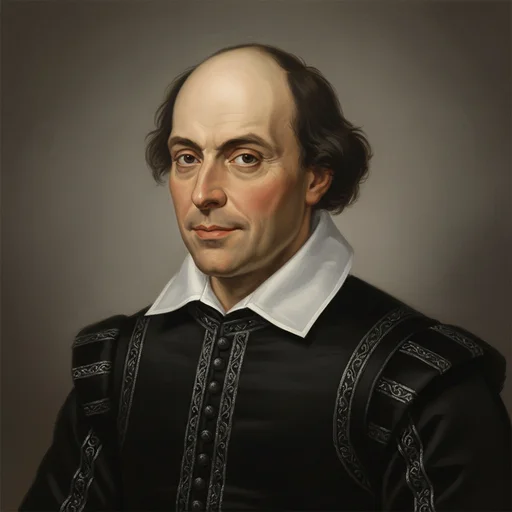
William Shakespeare
William Shakespeare was born in Stratford-upon-Avon in 1564; his baptismal record is dated 26 April. His father, John Shakespeare, a glover and leather worker, rose through the town's government and in 1568 was elected bailiff, its highest office; his mother, Mary Arden, came from a landowning family. He is thought to have studied Latin and rhetoric and read Ovid and Virgil at the town's King's New School. At eighteen he married Anne Hathaway, eight years his senior; Susanna was born first, then the twins Hamnet and Judith. No documents survive from the years between 1585 and 1592; by the end of that gap he was spoken of on the London stage as both actor and writer. In 1592 Robert Greene dismissed him as “an upstart crow, beautified with our feathers” — a barb now taken as proof that his name already carried. In the years when plague closed the playhouses he published Venus and Adonis and dedicated it to the Earl of Southampton. In 1594 he became a sharer in the Lord Chamberlain's Men; in 1599 he was among the founders of the Globe, and in 1603, when James I came to the throne, the company took the name King's Men. Romeo and Juliet belongs to these years of ascent. In 1596 he lost his eleven-year-old son Hamnet; the following year he bought New Place, the largest house in Stratford. He drew blank verse close to ordinary speech and let a king and a gravedigger speak on the same stage with equal weight. He loosened the borders of the inherited genres, folding comedy into tragedy. He died in Stratford in 1616, aged fifty-two, and was buried in Holy Trinity Church. Most of his plays reached us through the First Folio, compiled in 1623 by his fellow actors Heminges and Condell.