
Anonim
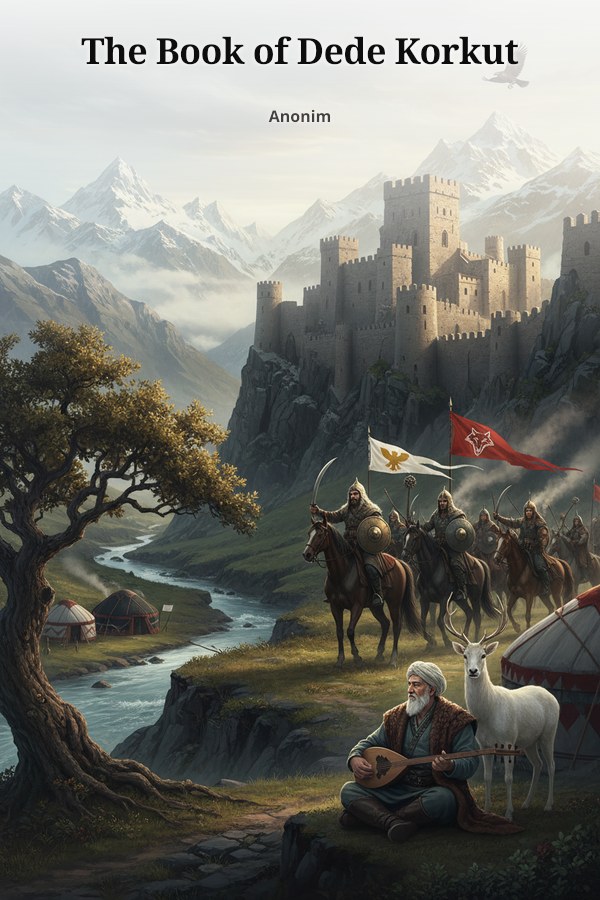
The Book of Dede Korkut is a collection of epic folk tales that narrate the lives, heroism, traditions, and moral values of the Oghuz Turks. Being anonymous, it serves as the most important transition work from the epic period to folk storytelling. It is written in a mixture of verse (poetry) and prose.
The struggle for survival of the Oghuz lords as they face infidel enemies, supernatural monsters (such as Tepegöz), and occasional internal rivalries and rebellions (the conflict between the Inner Oghuz and Outer Oghuz) to protect their lives, honor, and homeland.
Eastern Anatolia, Caucasus, Black Sea coasts, Inner and Outer Oguz lands; towering snow-capped mountains, raging rivers, and enemy infidel (Byzantine/Georgian) fortresses.
Legendary times not based on a specific historical year, where ancient shamanic nomadic Turkic beliefs are intertwined with elements of the newly established Islamic faith.
An epic, heroic, and at times tragic atmosphere; a sacred environment where heroism, honor, and valor are held above all else, and where supernatural and divine touches are deeply felt.
The perspective of the wise bard (Dede Korkut), who narrates events in an epic, musical, rhyming, and didactic language, acting as one who 'weaves the tales and tells the lineage.'
One cannot receive a name without performing acts of bravery, severing heads, and shedding blood. Breaking a promise is the greatest disgrace. The prayers and curses of holy figures like Dede Korkut and parents are granted instantly. Supernatural events (the aid of Khidr, the Angel of Death taking a soul) are a natural part of life. Hubris is inevitably punished by a divine strike.
The tribal/clan structure of the Oghuz Turks, a semi-nomadic warrior society. A cultural basin where, despite a seemingly patriarchal order, women (wives, mothers) are capable warriors, have a say in inheritance, and are held in great respect; where hospitality and valor are considered the highest virtues.
Characters are arranged at equal intervals on a circle; you can read the relationship type and dynamics by clicking on the lines.
Bir çizgiye tıklayarak ilişki detayını açın.
Dede Korkut is the spiritual mentor of Salur Kazan, the lord of the Oghuz. Kazan Bey holds Dede Korkut in high regard and defers to his wisdom on the most critical issues and disputes.
Whenever major problems arise during the Outer Oghuz rebellion or infidel attacks, Kazan Bey always calls upon Dede Korkut for advice.
While the father is saddened by his son Uruz's inexperience on the battlefield and looks down on him, Uruz is desperate to prove himself. This relationship, which begins with conflict, turns into deep pride once the son proves his courage.
Kazan Bey's lament when they go hunting that Uruz has not yet shed blood, and later, Uruz being taken captive in the battle against the infidels and his willingness to sacrifice himself for his father.
A passionate and strong hierarchical bond based on deep respect and equality. Burla Hatun is a warrior capable of saving Kazan Bey when needed and is loyal enough to pay the ultimate price to protect his honor.
In the crisis where Kazan is taken captive or when their tribe is raided, Burla Hatun girds her sword and confronts the infidels herself.
Even though Dirse Han is tricked by the lies of his envious men into shooting his son with an arrow, Boğaç Han harbors no grudge against his father. Despite falling into a merciless trap set by his father, the son represents absolute obedience and forgiveness.
After being healed by the intervention of Khidr, Boğaç rushes to save his imprisoned father from the hands of forty treacherous men.
Although betrothed since birth, their love is reinforced by trials of strength and skill on the field. The sixteen-year longing between them is overcome through their loyalty, as they are two valiant lovers well-matched to one another.
As Beyrek reveals his identity while disguised as the 'Crazy Bard,' he recalls their past archery and wrestling challenges through poetry.
This relationship, which begins with great hubris and arrogance, transforms into an understanding of human helplessness in the face of divine power, turning into fear and absolute submission.
Dumrul threatens Azrael with his sword and chases him, but Azrael, having taken the form of a pigeon, knocks him off his horse and pins him to the ground by sitting on his chest.
Despite growing up sharing the same hearth (and being raised side-by-side like lion cubs), it turns into a battle between good and evil. Basat brings an end to his milk-brother, who had plunged the Oghuz into mourning.
Basat, having blinded Tepegöz by burning his only eye, rejects all of his deceptive pleas—such as 'we have done enough, let us not do more, let us become brothers'—made in the hope of escaping, and cuts off his head.
A relationship that begins with honorable kinship turns into a deadly power struggle and rebellion when Aruz's pride is wounded. Aruz's ambition leads to the division of the Oghuz.
Aruz, the head of the Outer Oghuz, rebels because he was not invited to Salur Kazan's banquet, declares enmity against Salur Kazan, and kills Beyrek.