
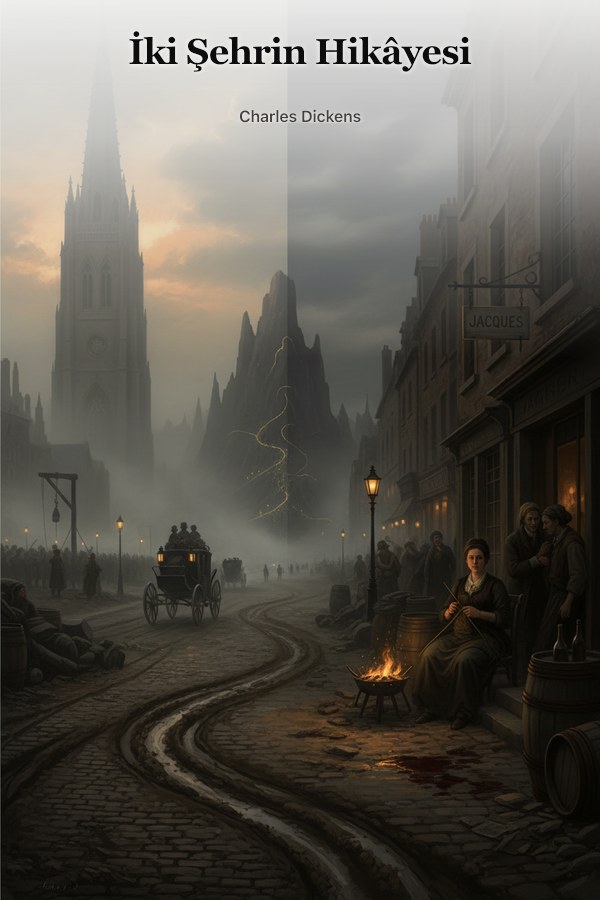
Charles Dickens
Знаменитая классика Чарльза Диккенса 1859 года «Повесть о двух городах» разворачивается в Париже и Лондоне накануне и во время Французской революции. Произведение строится вокруг гнета аристократии, разрушительного хаоса революции и разворачивающейся на этом фоне поразительной истории любви и самопожертвования.
На макроуровне — борьба не на жизнь, а на смерть между угнетающей аристократией и народными массами, годами терпевшими притеснения и превратившимися в машину кровавой мести; на микроуровне — борьба личностей, пытающихся освободиться от темного прошлого, травм и семейного наследия, чтобы обрести новую жизнь в любви и милосердии.
Лондон — относительно защищенная столица Англии с ее беспощадной, формалистской судебной системой; бедный парижский квартал Сент-Антуан во Франции, объятый голодом, нищетой, бунтом и залитыми кровью мостовыми; сам Париж и туманные дороги между ними.
Эпоха, берущая начало в 1775 году и охватывающая кошмарные первые этапы Французской революции 1792 года и последующих лет, ставшими одними из самых мрачных страниц в истории.
Атмосфера, сотканная из мрака, гнетущей тьмы, смертоносного напряжения и безнадежности; удушливая обстановка, в которой каждое мгновение ощущается как абсолютная, жестокая тирания аристократии, так и кровожадный гнев, копившийся в народе до и во время революции.
Всеведущий повествователь от третьего лица, который смотрит на события свысока, добавляя философские, зачастую меланхоличные и ироничные комментарии, передавая двуличность человеческой натуры одновременно с состраданием и осуждением.
В обществе пролегает непреодолимая пропасть между дворянами и простым народом; аристократы имеют абсолютную власть над жизнями обычных людей и считают их никчемными, словно животных. Господствует вера в то, что мир создан только для господ. Цена этой несправедливости оплачивается тем, что массы, накопившие гнев от голода и гнета, превращаются в неконтролируемого зверя, которому не может помешать ни закон, ни власть, и устанавливают свои собственные жестокие порядки.
Во Франции это почва, на которой массы, страдающие от нищеты из-за непомерных налогов, системы откупщиков и голода, объединяются под паролем «Жак», готовясь к величайшему социальному взрыву в истории. В Англии же наблюдается консервативный быт, где смертные казни воспринимаются как зрелищное развлечение, а люди гонятся за богатством и грубой силой, соблюдая при этом свои внутренние границы.
Персонажи расположены на равном расстоянии по кругу; нажимая на линии, вы можете прочитать тип и динамику отношений.
Bir çizgiye tıklayarak ilişki detayını açın.
Безусловная любовь дочери — величайшая сила, привязывающая травмированный разум отца к реальности; между ними существует священная и исцеляющая связь.
Когда Люси входит в темную комнату и ее отец поднимает голову от верстака, она не испытывает к нему отвращения, напротив, прижимает его голову к своей груди.
Гармоничные отношения, основанные на глубоком уважении, верности и самопожертвовании; Дарней делает все возможное, чтобы сохранить покой в семье Манетт.
Сидя под платаном в Лондоне, Чарльз Дарней признается, что любит Люси с таким почтением, будто она ангел, дополняющий существование ее отца больше, чем его собственную жизнь.
Несмотря на невероятное внешнее сходство, они являются полными противоположностями по своей сути; один — символ достойной жизни и добродетели, другой — символ растраченного потенциала и никчемности.
Глядя в зеркало, Картон признается, что ненавидит Дарнея, потому что видит в нем ту яркую и лучшую версию жизни, которой у него самого нет.
Картон видит в Люси далекий горизонт, священного избавителя, к которому ему никогда не прикоснуться, и готов в любой момент пожертвовать своей пустой жизнью ради этой женщины.
Картон со слезами на глазах просит Люси хранить его секрет даже в худшие времена и обещает, что в любой момент готов отдать жизнь ради ее семьи.
Банкир Лорри проявляет огромное терпение перед лицом травм доктора Манетта, становясь для него непоколебимой опорой, связывающей его с внешним миром и практической жизнью.
Когда у доктора случается девятидневный кризис, он не отходит от него ни на шаг, пытаясь с огромным уважением и деликатностью заботиться о его душевном здоровье.
Оба являются силами, разжигающими революцию, но бескомпромиссная, пропитанная жаждой мести решимость мадам Дефарж постоянно подавляет малейшие проявления милосердия у ее мужа, заставляя его подчиняться.
Когда мадам Дефарж, продолжая вязать, почувствовала колебания мужа, она упрекающим тоном напомнила ему, что он всегда должен хранить в себе и тигра, и дьявола.
Дарней ненавидит жестокую и привилегированную аристократию, которую олицетворяет его дядя, и порывает с ней, в то время как маркиз считает своего племянника предателем устоев и глупцом; примирение между ними невозможно.
Когда за ужином в замке Чарльз Дарней объявляет, что отказывается от всего своего наследства и будет добывать хлеб насущный в Англии, маркиз отвергает его со скрытой насмешкой и презрением.
Пока Страйвер демонстрирует свою показную самоуверенность и грубую силу в суде, всю интеллектуальную работу и подготовку дел берет на себя Картон; несмотря на то, что они терпят друг друга, внутри царит полное взаимное безразличие.
Работая у камина в три часа ночи, Страйвер хвалит себя как льва, делающего всю работу, а Картона называет блеклым шакалом, который выполняет все дела, оставаясь в тени.
Дефарж, будучи бывшим слугой доктора, испытывает к нему почтительную жалость и защищает его от опасности на чердаке после освобождения, однако он не прочь использовать это положение как «зрелище» ради дела революции.
Даже выставляя доктора на чердаке напоказ своим друзьям-революционерам, словно диковинного зверя, Дефарж проявляет крайнюю осторожность, приближаясь к нему.
Мисс Просс подобна непоколебимому и ревнивому щиту: она воспринимает каждого ухажера, крутящегося вокруг Люси, как врага и готова пожертвовать собственной жизнью ради её блага.
Мисс Просс при любой возможности упорно твердит своей «пташке» Люси, что в этом мире её достоин лишь её брат и что никто, включая мистера Лорри, её не заслуживает.